

Death Tarot Card Meaning: Transformation, Love & Career
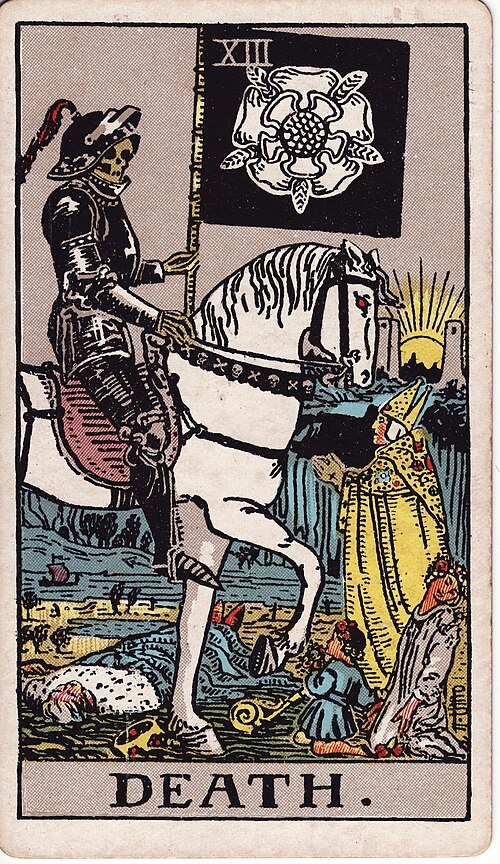
Illustration by Pamela Colman Smith
Death Tarot Card Meaning
Death represents an ending that changes the shape of your life: a role, pattern, expectation, or chapter may have run its course. The card asks what needs to be released so that a more honest beginning has room to develop.
Upright keywords
Transformation · Endings · Release · Transition
Reversed keywords
Resistance to change · Unfinished endings · Holding on · Gradual renewal
Symbolism and the story of Death
In the traditional image, a skeletal rider moves on a white horse and carries a black banner with a white rose. People of different ages and positions appear before the rider, suggesting that change reaches everyone. A rising sun in the distance places the ending within a wider cycle of renewal.
Death upright meaning
Upright Death asks you to recognize when maintaining the old arrangement costs more than allowing it to end. This may concern a habit, relationship dynamic, project, or identity. Give the transition practical shape: acknowledge what is over, keep what was valuable, and make space for the unfamiliar. Renewal rarely requires pretending the loss did not matter.
Death reversed meaning
Reversed Death can show resistance to an ending, but it may also describe a slow transformation that needs more time. Look for unfinished conversations, lingering attachments, or routines that keep an old chapter artificially open. You do not have to force a dramatic break; small, consistent acts of release can make change more sustainable.
Death meaning in love and relationships
Upright
In love, Death may signal a relationship changing form or an old pattern needing to end. It does not automatically mean separation. A partnership might move forward through honest renegotiation, while a single person may be ready to release an attachment that limits new connection.
Reversed
You may be clinging to an earlier version of the relationship or keeping contact that makes closure harder. Name what has changed before deciding what to preserve. Reversed Death can also encourage patient rebuilding when both people are actively changing an unhealthy pattern.
Death meaning in career and work
Upright
A role, method, or professional goal may no longer fit. This card encourages an orderly transition: finish essential commitments, preserve useful knowledge, and consider what skills transfer to the next chapter. An ending can clarify your direction without immediately revealing the entire future.
Reversed
Familiarity may be keeping you in a professional arrangement that has stopped working. Examine whether the barrier is uncertainty, practical constraints, or attachment to an old identity. A transition plan can help you move carefully; the card does not require an abrupt resignation.
Death meaning in finances and resources
Upright
Changing circumstances may call for a different financial routine. Review recurring commitments, outdated priorities, and costs associated with a transition. Death favors letting go of arrangements that no longer serve your actual situation and preparing carefully for a new stage of responsibility.
Reversed
An obsolete financial habit or unresolved commitment may be limiting flexibility. Notice where sentiment or avoidance prevents a clear review. Changes can be gradual: update one recurring expense or one planning assumption at a time, using qualified advice for significant decisions.
Death meaning in spiritual growth and personal development
Upright
Death invites you to loosen an identity you have outgrown. Beliefs that once offered support may need reconsideration as your life changes. Honor the earlier version of yourself without requiring it to govern every future choice. Transformation can include grief, gratitude, and curiosity together.
Reversed
Spiritual change may be happening quietly beneath an outwardly familiar life. Avoid judging progress only by dramatic breakthroughs. Ask which old story you keep repeating about who you are, and whether a gentler, more current understanding is ready to take its place.
Death in a past, present and future reading
In the past position, Death may point to an ending that reshaped your priorities. Reflect on what you released, what you still mourn, and what possibilities became available afterward.
In the present position, Death asks you to acknowledge a transition already underway. Identify what needs closure and which practical arrangements would support you through the change.
In the future position, it invites flexibility around a chapter that may change. Prepare by loosening outdated expectations and strengthening the support that helps you navigate uncertainty.
Questions for your own reflection
- What am I maintaining after its purpose has ended?
- What deserves gratitude or grief before I move forward?
- Which small act of release would make space for renewal?
Questions about Death
Does the Death tarot card predict someone's death?
No. In reflective tarot reading, Death is interpreted as an archetype of endings and transformation. It should not be used to predict a person's death, diagnose illness, or create fear about safety.
Does Death mean that my relationship must end?
No. It can describe the end of a relationship pattern, expectation, or phase. Look at what is changing and whether both people can participate honestly in a healthier arrangement.
What is the difference between Death and The Tower?
Death emphasizes release and the transition between chapters. The Tower emphasizes a disruptive revelation or collapse of an unstable structure. Both involve change, but Death need not carry The Tower's suddenness.
See how the cards connect in your own reading
Explore the influences behind you, the present moment and a possible direction ahead.
Try a free 3-card reading