

Five of Swords Meaning: Conflict, Love, and Reversed
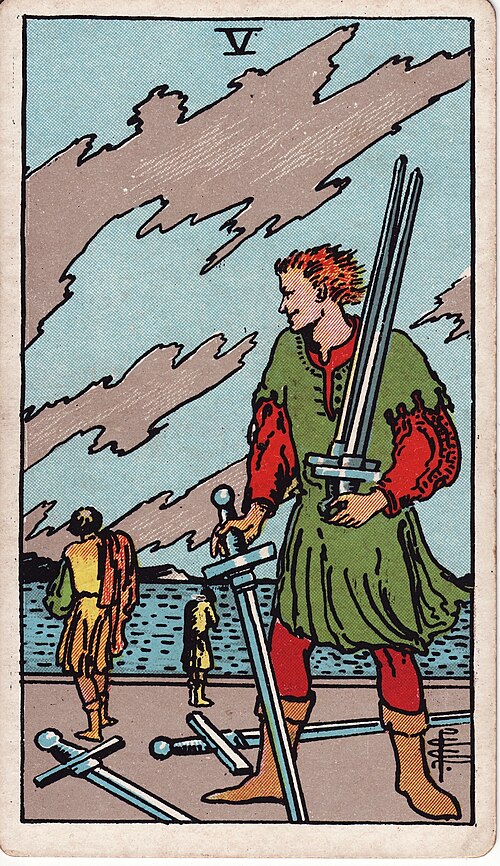
Illustration by Pamela Colman Smith
Five of Swords Tarot Card Meaning
The Five of Swords asks what a victory costs. An argument or competitive exchange may leave you ahead while weakening trust. Examine your methods, boundaries, and whether continued conflict serves something you truly want to protect.
Upright keywords
Conflict · Hollow victory · Competition · Self-interest
Reversed keywords
Reconciliation · Accountability · Unresolved tension · Disengagement
Symbolism and the story of Five of Swords
A foreground figure holds several swords while two people walk away near water. More swords lie on the ground beneath broken-looking clouds. The scene contrasts collecting the symbols of victory with maintaining meaningful connection, leaving the encounter’s emotional cost visible.
Five of Swords upright meaning
Upright, the Five may reflect a dispute driven by pride or the need for the final word. Distinguish a necessary boundary from escalating a contest. A documented response or deliberate departure may serve better. Decide what conduct you will participate in, even when you cannot control everyone’s approach.
Five of Swords reversed meaning
Reversed, this card can suggest repair, accountability, or leaving a damaging dynamic. It may also reflect resentment beneath apparent peace. Clarify what happened, what responsibility each person accepts, and what would change. Repair requires more than declaring that an uncomfortable dispute is finished.
Five of Swords meaning in love and relationships
Upright
A disagreement may have become a struggle over who is right. Notice sarcasm, scorekeeping, or defensive language, and return to the actual need beneath the argument. The card does not identify a villain. If a relationship involves intimidation or harmful behavior, prioritize your boundaries and appropriate support.
Reversed
A sincere apology and changed behavior may help repair trust. Reconciliation should leave space for the hurt to be acknowledged rather than demanding immediate forgiveness. If the same argument returns unchanged, consider whether clearer boundaries or distance would be more useful than another attempt to win agreement.
Five of Swords meaning in career and work
Upright
Competition, office politics, or a tense negotiation may be affecting your work. Consider your long-term reputation before pursuing a short-term win. Keep agreements clear and focus on the shared task where possible. Disengaging from an unproductive argument does not mean abandoning a legitimate concern.
Reversed
A team may be ready to reset expectations after conflict. Agree on responsibilities, decision-making, and respectful ways to raise disagreements. If tension is still unresolved, naming the practical issue calmly can help more than relying on a superficial return to normal.
Five of Swords meaning in finances and resources
Upright
A money disagreement or competitive urge may be encouraging decisions that do not serve your real priorities. Pause before spending to prove a point or agreeing to terms under pressure. Evaluate the commitment itself, including what the dispute might cost in time, resources, and trust.
Reversed
You may be reconsidering an unhelpful financial contest or seeking a workable agreement. Put the details in writing and clarify responsibilities. A compromise is useful when it is understandable and sustainable, not simply when it ends an uncomfortable conversation for the moment.
Five of Swords meaning in spiritual growth and personal development
Upright
Notice where being correct has become more important than being kind, fair, or grounded. Spiritual conviction does not require winning every debate. The card invites humility about your perspective while keeping the right to protect your values and refuse disrespectful treatment.
Reversed
Release may involve accepting that you will not receive the perfect apology or final word. You can reflect on your own behavior without assuming responsibility for everything that happened. Choose a response that allows you to preserve your integrity and move toward greater peace.
Five of Swords in a past, present and future reading
An earlier conflict or costly victory may explain current guardedness. Consider which lesson remains useful and which influence can be released.
Examine the exchange’s cost. A boundary, calmer discussion, or deliberate withdrawal may protect your priorities better than continuing the contest.
Prepare to meet disagreement with integrity. Clear priorities and limits can help distinguish useful competition from a conflict costing too much.
Questions for your own reflection
- What would winning this argument actually give me?
- Am I defending a value or protecting my pride?
- What would meaningful repair require from everyone involved?
Questions about Five of Swords
Does the Five of Swords mean I will win?
It can depict victory, but its emphasis is on the consequences and methods of the contest. The useful question is whether the outcome would still serve your values and relationships.
Is the Five of Swords always a warning about someone else?
No. It may describe a shared dynamic or invite you to review your own approach. Avoid treating it as proof that another person has bad intentions.
Does the reversed Five of Swords mean reconciliation?
Reconciliation is one possibility. It can also reflect unresolved resentment or a decision to disengage. Look for accountability and practical changes before assuming the conflict is repaired.
See how the cards connect in your own reading
Explore the influences behind you, the present moment and a possible direction ahead.
Try a free 3-card reading