

Uriel means God is my light. Other common English meanings include “light of God” and “fire of God.” The name is Hebrew. The angel appears in ancient works such as 1 Enoch and 2 Esdras. Later Jewish and Christian traditions also describe him. His roles vary across those sources.
If this symbol of wisdom interests you, start with the name and the texts. Read what each source says about him. There is no need to begin with a fixed ranking of angels or expect prayer to bring an immediate answer.
Reviewed and updated October 15, 2026
Uriel Name Meaning: A Hebrew Name of Light
The name comes from Hebrew, rather than Ancient Greek. The ending El refers to God. English reference works give several related translations for the full name, including “God is my light” and “flame of God.” The NET Bible’s collected dictionary entries show these variations.
Light and fire share the idea of bringing light. A name meaning gives you a starting point. It does not explain every role that later writers give to the angel.
Human figures in the Bible also bear the name Uriel, including in Chronicles. A passage that uses this name may refer to a person. Check the context to see whom it describes.
Where Does Angel Uriel Appear?
Uriel in the Book of Enoch
In 1 Enoch 20:2, Uriel is listed among the holy angels and given a role concerning the world and Tartarus. The work is an ancient Jewish text of visions, a form often called apocalyptic literature. It explores divine order, judgment and the heavens.
The Book of Enoch has an important place in the Ethiopian Orthodox Tewahedo canon. Most Jewish and Christian biblical collections do not include it. Its place in Scripture depends on the collection and tradition you mean.
Another role appears in 1 Enoch 10:1–3, in R. H. Charles’ translation. God sends Uriel to warn Noah about the coming flood. Noah is the son of Lamech. Uriel explains how Noah’s line may survive. Here Uriel brings the message and Noah receives it. The relationship also fits Genesis 5:28–29, which names Noah as Lamech’s son.
Uriel and the Prophet Ezra in 2 Esdras
2 Esdras 4:1 names Uriel as the angel sent to answer Ezra. Their dialogue asks difficult questions about suffering and justice. It also explores the limits of what people can understand. The central work about Ezra’s visions is also known as 4 Ezra.
This role helps explain why later writers connect Uriel with learning and wisdom. It is a role within a text. It does not promise that everyone who prays will receive a clear answer.
Uriel in Different Christian Traditions
Christian communities differ in the texts they use and the ways they pray. The Orthodox Church in America’s account of the heavenly powers includes Uriel and describes him through the themes of divine light and enlightenment. It also discusses traditional icon imagery.
Roman Catholic teaching takes a different approach to naming angels. The Directory on Popular Piety, paragraph 217, allows the names Michael, Gabriel and Raphael because they occur in Catholic Scripture. The Catholic canon includes Tobit, where Raphael appears, but not 1 Enoch or 2 Esdras. When discussing Uriel in another Christian tradition, explain that tradition’s own view.
An angel should also be distinguished from the Holy Spirit in Christian theology. The Catechism, paragraphs 327–330, describes angels as created spiritual beings. Paragraph 689 describes the Holy Spirit as divine. Both may be described through light or fire. That shared imagery does not make Uriel another name for the Holy Spirit.
Some lists place Uriel fourth among the archangels. Other lists differ. A place on one list does not rank his power for every tradition. Name the source when you give a numbered place.
Light, Fire and Uriel’s Symbols
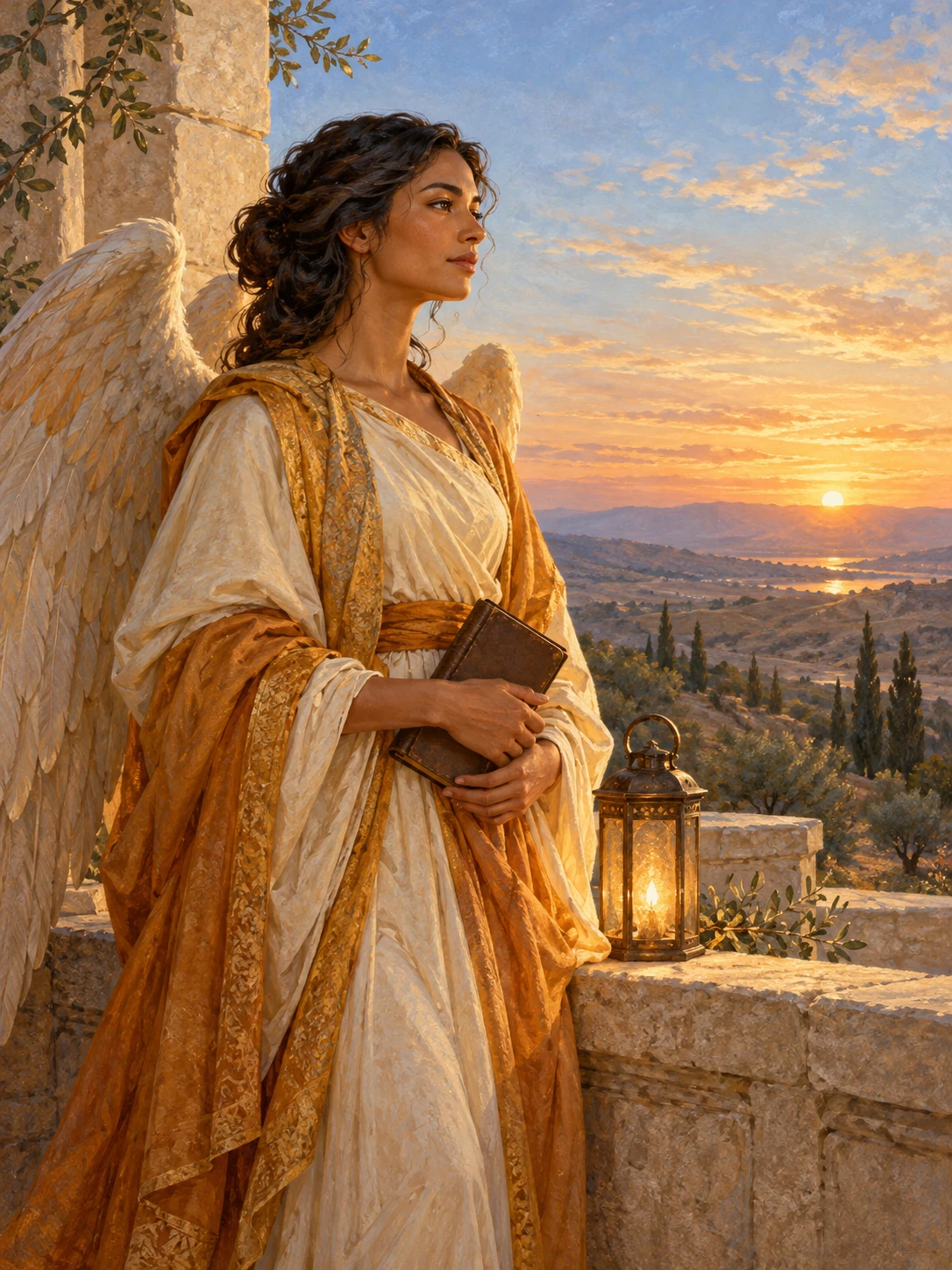
Light and fire reflect the familiar meanings of the name. The Orthodox Church in America describes Uriel holding a flame in his lowered left hand. A sword is raised in his right hand. This is a specific icon tradition. Other artists may use a book or scroll to suggest teaching.
An image shows an artist’s tradition and choices. It cannot establish an angel’s physical appearance. Modern color associations vary too. One color need not be a signal that identifies Uriel in every setting.
You might value an insight after reading or prayer. It can matter to you without proving contact with an angel. Ask what became clearer and what still needs checking. Leave room for facts, other people’s views and ordinary explanations.
Uriel and John the Baptist in Religious Art
John the Baptist appears in a different kind of source: religious art and the stories used to explain it. The Louvre’s catalogue entry for Leonardo da Vinci’s Virgin of the Rocks discusses a later story in which Uriel cared for Elizabeth and her son John. The museum identifies that story as apocryphal.
The same entry cautions that the angel’s identity in the painting remains uncertain. Gabriel is another possibility it mentions. It is therefore more careful to describe Uriel as one proposed reading of the image. The painting does not settle the name of its angel.
Keep this art discussion separate from the accounts of Noah and Ezra above. These are different figures, texts and settings. An artist’s composition, a later story and a biblical passage each need their own context. This lets you appreciate the artwork while being clear about what the evidence supports.
Two Ways Uriel Teaches in Ancient Texts
The phrase angel of wisdom can describe Uriel’s teaching role in these passages. Compare what he does in each scene. One scene challenges a person’s confidence. Another describes an ordered pattern in the heavens. Reading them separately helps you see how each account presents its angelic guide.
Ezra: Recognizing the Limits of an Answer
In 2 Esdras 4:1–12, Uriel answers Ezra with a challenge. He asks Ezra to weigh fire, measure a gust of wind or bring back yesterday. Ezra cannot do those things. Uriel then points to the difficulty of understanding even familiar experiences before trying to grasp God’s ways.
This scene complicates the idea that the angel always provides a simple explanation. His questions expose the limits of Ezra’s understanding. Ezra’s concern about suffering remains serious; the exchange does not turn it into an easy problem.
A possible personal reflection is to ask what you can explain and what remains uncertain. That is a suggested application of the passage. The text does not provide a prediction about your next decision.
Enoch: Following an Ordered Pattern
A different teaching role appears in 1 Enoch 72:1. Enoch identifies Uriel as the guide who shows him the courses of the heavenly lights. The chapter goes on to describe the sun’s movements and the changing lengths of day and night.
Here the lesson concerns an ordered cosmos. The account belongs to the ancient text’s picture of the heavens. Read its descriptions in that literary setting before making connections with modern astronomy or personal experiences.
Together, these two scenes offer distinct pictures of instruction: receiving an explanation and recognizing the limits of an explanation. Keep the difference in view when another source describes Uriel as an angel of wisdom.
A Worked Example: Turning Insight Into a Useful Question
Suppose you want to begin a community project. A promising conversation leaves you excited, and you are tempted to take that feeling as a complete answer. Use the theme of illumination to examine the idea more carefully. This is an original Angel Oasis example, rather than a practice prescribed by either ancient passage.
Start With What Happened
Write the observation: “Two neighbors said they would enjoy a monthly book group.” Keep it separate from the conclusion: “Everyone will come, so I should book a large room.” The first sentence records a conversation. The second adds expectations that still need checking.
Find the Question You Can Answer
Replace “Will this succeed?” with something smaller: “How many people can attend on the first Saturday?” Ask about the date, location and books before making commitments. You may discover that five people prefer a different evening. That information gives the idea a clearer shape.
Make a Small, Reversible Start
Try one meeting before promising a year of events. Set a manageable length and choose a place the group can use. Decide who will send the invitation. A small first step lets you learn from an actual event while keeping the commitment clear.
Review Without Inventing a Message
Afterward, note what worked and what people requested. Three attendees may want to continue, while others cannot make the time. That result can guide your next choice without becoming proof that an angel approved or rejected the project.
You can use the reflection below to record three short notes: what is known, what needs a question and what action comes next. Prayer may express your hope for wisdom. The notes help you describe how you will put that intention into practice.
Keep a Short Record of What You Read
A simple reading record can help when several descriptions of Uriel seem to disagree. Choose one claim that interests you. Write down where it appears, what kind of source it is and what it actually says. The goal is a clearer account, rather than a longer list of angel associations.
Separate the Passage From Your Interpretation
For the Ezra scene, your first note might be: “The angel asks questions Ezra cannot answer.” Your second note can state your own response: “This makes me think about questions I cannot settle yet.” Keeping those notes separate shows which idea comes from the text and which is your reflection.
You might take a different lesson from the same scene after another reading. Record what changed in your understanding. You do not need to treat a personal interpretation as a message that every reader must accept.
Check What an Image Can Tell You
With an icon, note the object shown and the tradition that explains it. For a painting, begin with the museum’s title and description. If a catalogue offers several possible identities for a figure, keep those possibilities in your notes. An uncertain identification should stay uncertain when you explain the picture to someone else.
For example, a book held by an angel may suggest teaching to you. That observation alone does not identify the figure as Uriel. A title, inscription or account from the artist’s setting may provide more information.
Write Down the Question Still Open
A useful final note names what remains to be checked. You might ask which translation a writer used, which church tradition an image belongs to or whether a claim comes from an ancient text. This turns a vague disagreement into a question you can investigate.
If you share what you learned, include the source and the limit together. You can say that one text gives Uriel a teaching role, while a particular artwork leaves its angel unnamed or uncertain. That is more precise than making one description stand for every tradition.
End by choosing whether to read another passage, ask someone familiar with the tradition or leave the question open for now. A careful reading can remain meaningful even when it does not produce one final answer.
How to Reflect on Wisdom with Uriel
This original Angel Oasis exercise uses illumination as a theme for a practical decision. It is not an ancient ritual.
- Name one question. Write it in a sentence. Keep it specific enough that you can take a useful next step.
- Separate facts from guesses. List what you know and what you are assuming.
- Find the missing information. Decide whether you need to read, ask someone a question or give the situation more time.
- Pray or pause. Ask for patience, honesty and a willingness to learn.
- Choose one action. Gather a fact, have a conversation or make a small start.
For example, you may be unsure whether to take a class. Write down its cost, timing and subject. Note what you hope to learn and what you still need to ask. Reflection can help you pay attention. Checking the details helps you decide.
Students, teachers and creative people may find the symbol of light encouraging. It can remind you to keep working and stay curious. You can use your judgment without waiting for a sign or treating each coincidence as guidance.
An Original Prayer Inspired by Uriel
This contemporary prayer was written for Angel Oasis. It is addressed to God and draws on the themes of light and wisdom.
God of light, help me see this situation with patience and honesty. May the image of Uriel remind me to seek understanding, listen carefully and admit what I do not know. Give me courage to ask a useful question and wisdom to take a thoughtful next step. Let what I learn lead me toward kindness and responsible action. Amen.
You may adapt these words to your beliefs. You need no special object or fixed number of repetitions. A quiet pause can be worthwhile even when no unusual experience follows.
Common Questions About Uriel
What does Uriel mean?
Common English interpretations include “God is my light,” “light of God” and “fire of God.” The name is Hebrew.
Is Uriel mentioned in the Bible?
The angel is named in 1 Enoch and 2 Esdras, whose place varies across biblical collections. Human figures called Uriel also appear in Chronicles. Read each passage in context.
What is Uriel known for?
Ancient accounts portray different roles, including answering Ezra and explaining divine mysteries. Later devotion often emphasizes light, instruction and wisdom.
Is Uriel always the fourth archangel?
No single numbered ranking is shared by every source or community. A description of Uriel as fourth should identify the particular list.
How can I explore Uriel without searching for signs?
Read a relevant passage, consider its tradition and use a simple reflection if helpful. Our guardian angel communication guide offers further ideas for a regular practice.
Sources and Further Reading
- NET Bible — Uriel dictionary entries and Hebrew name
- 1 Enoch 20, Charles translation
- 2 Esdras 4:1, Bible Gateway
- Orthodox Church in America — Synaxis of the Heavenly Powers
- Vatican — Directory on Popular Piety, paragraph 217
For distinct traditions and roles, explore Archangel Michael, Archangel Raphael and Archangel Metatron.