

A spiritual journey is the ongoing process of exploring meaning, values, connection, and your relationship with something greater than everyday concerns. For some people, that greater reality is God. Others describe it through nature, conscience, community, love, or a deeper sense of purpose.
People often begin this journey after a major change, a season of uncertainty, a powerful moment of gratitude, or a growing feeling that their usual routines no longer answer their deepest questions. The process can also start quietly. You may simply feel drawn to prayer, reflection, sacred texts, meditation, service, or time in nature.
The word “journey” describes movement over time. Your beliefs, questions, and practices may change as you learn. Traditions describe this process in different ways, so the stages below offer a flexible map rather than a fixed sequence.
What Does a Spiritual Journey Mean?
The meaning of a spiritual journey depends partly on the language and tradition a person brings to it. A Christian may understand the journey as growing closer to God and living with greater faith, love, and humility. Someone outside an organized religion may focus on inner awareness, purpose, connection, or ethical living.
Research on how Americans describe spirituality shows the same variety. People connect the term with faith, a higher power, inner peace, meaning, kindness, direction, and understanding themselves. Pew Research Center’s work on spirituality shows why a single definition cannot cover every person’s experience.
A useful working definition is simple: a spiritual journey is a sustained exploration of what gives life meaning and how that understanding should shape the way you live.
That final part matters. Insight becomes meaningful when it influences choices, relationships, and responsibilities. A spiritual practice can help you pause and listen. The next step is to carry what you learn into ordinary life.
Why Do People Begin a Spiritual Journey?
There is rarely one starting point. Common beginnings include:
- A loss, illness, separation, move, or career change
- A feeling of emptiness despite outward success
- Curiosity about prayer, angels, meditation, or sacred traditions
- A strong experience of awe, gratitude, beauty, or connection
- Questions about identity, purpose, mortality, or how to live well
- A desire to repair relationships or change an unhealthy pattern
- A wish to reconnect with a faith tradition
- Exposure to a teacher, community, book, or practice that feels meaningful
A dramatic experience can open the door, yet many journeys grow through small repeated choices. Ten quiet minutes in the morning, a weekly worship service, a journal entry, or one act of service can become a steady foundation.
Common Stages of a Spiritual Journey
These stages may overlap, repeat, or arrive in a different order. You might move between them several times as your life changes.
1. The First Question
The journey often begins with a question: What matters most to me? Why am I here? What do I believe about God? How should I respond to this change?
You do not need an immediate answer. Write the question down and notice where it leads. A sincere question creates space for learning and keeps you from accepting the first confident answer you encounter.
2. Seeking and Learning
During this stage, people explore books, traditions, communities, teachers, and practices. Curiosity is useful, especially when paired with careful judgment.
Ask where a teaching comes from. Look for the difference between Scripture, historical tradition, modern interpretation, and personal testimony. Notice whether a source encourages honesty, responsibility, compassion, and respect for other people’s freedom.
If angelic traditions interest you, our guide to the names and roles of the seven archangels shows how different sources preserve different lists.
3. Building a Practice
Ideas become easier to understand through regular practice. Depending on your beliefs, that practice may include:
- Prayer
- Reading Scripture or other sacred texts
- Meditation or quiet reflection
- Gratitude journaling
- Worship or community gatherings
- Time in nature
- Creative work
- Volunteering and service
- Honest conversation with a trusted mentor
Choose one or two practices you can sustain. A simple routine followed consistently gives you more useful information than an intense routine abandoned after a few days.
4. Reconsidering Old Assumptions
A spiritual journey may bring you face to face with beliefs, habits, or expectations that no longer fit. This can feel uncomfortable. You may discover that an idea came from fear, family pressure, social media, or a desire for certainty.
Approach this stage with patience. Ask what evidence supports a belief, how it affects your behavior, and whether it helps you act with integrity. You can revise an interpretation while still honoring the tradition or experience that first led you toward it.
5. Living Your Values
Spiritual growth becomes visible in daily choices. You may listen more carefully, apologize sooner, set a needed boundary, keep a commitment, or make time for someone who needs support.
Large feelings can fade. Values give the journey continuity. Choose one value, such as compassion, courage, truthfulness, or patience, and name one action that expresses it today.
6. Connection and Service
Many traditions link spiritual maturity with care for others. Service can include formal volunteering, practical help for a neighbor, generous attention to a family member, or work that protects dignity and fairness.
Community also provides perspective. A trustworthy group can challenge blind spots, share wisdom, and keep one unusual experience from carrying too much weight.
7. Integration and Renewal
Over time, spiritual practice becomes part of ordinary life. You still have questions. Difficult periods still arrive. The difference is that you have developed ways to pause, reflect, seek help, and return to your values.
Renewal may require changing a routine, finding a new community, or returning to a basic practice that once helped you. Repetition is part of the process. Growth often looks like meeting a familiar question with greater honesty and skill.
Spiritual Journey and Spiritual Awakening
People often use “spiritual journey” and “spiritual awakening” together. An awakening usually describes a particular shift in awareness, priorities, or belief. A journey includes the longer process before and after that shift.
An awakening can feel sudden. Integration usually takes time. If a powerful experience changes how you see your life, record what happened and give yourself room to observe its effects. Focus on sleep, relationships, work, and daily responsibilities while you explore the meaning.
A healthy interpretation should support clear judgment and compassionate action. Experiences that bring severe distress, prolonged sleeplessness, confusion, or difficulty functioning deserve prompt support from a qualified health professional.
How to Begin Your Spiritual Journey
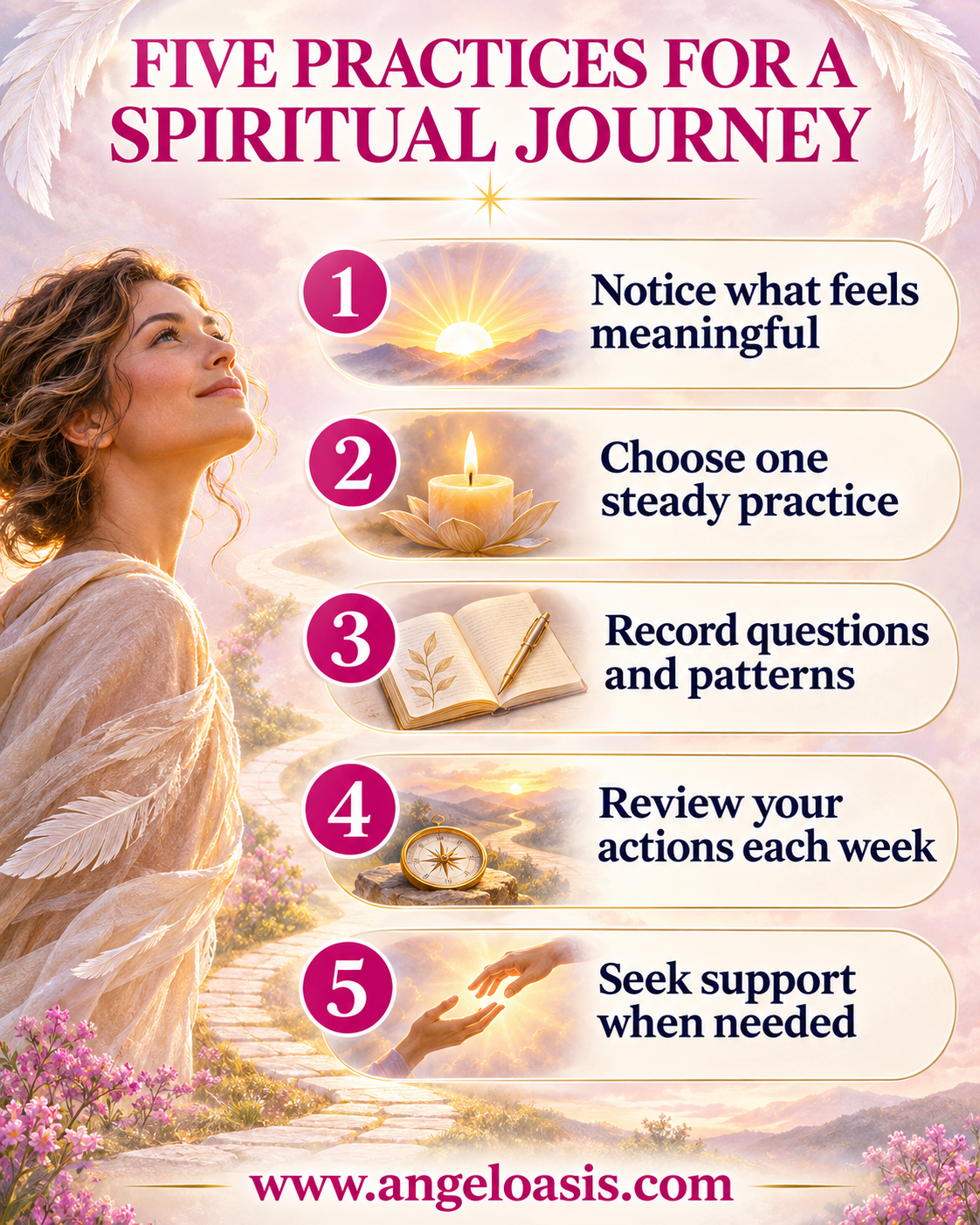
You can begin without designing a complete philosophy. Use these five steps for the next seven days.
1. Name Your Question
Complete this sentence: “Right now, I want to understand…”
Keep the question specific. Examples include:
- How can I make choices that match my values?
- What place does prayer have in my life?
- Which beliefs have I inherited, and which have I examined?
- Where do I feel a sense of connection or awe?
- What kind of person do I want to become?
2. Choose One Daily Practice
Set aside ten minutes at a consistent time. Pray, read a short passage, sit quietly, or write in a journal. Turn off notifications and stay with one practice for a week.
3. Record What You Notice
Write three short lines:
- What held my attention?
- What emotion or question appeared?
- What action would express my values today?
This keeps reflection connected to your real life.
4. Find a Trustworthy Source or Community
Look for leaders who explain where their teachings come from, welcome careful questions, respect boundaries, and avoid guaranteed outcomes. Healthy communities allow people to think, learn, and make decisions without pressure.
5. Take One Grounded Action
Choose an action you can verify and complete: make a call, apologize, research a decision, attend a service, ask for help, or spend time with someone who matters to you.
For a broader approach to personal change, see 12 practical ways to improve yourself.
Questions for a Weekly Spiritual Check-In
At the end of each week, ask:
- Which practice helped me become more attentive?
- Where did I act in line with my values?
- Which idea needs more evidence or context?
- Did any source use fear, urgency, or certainty to pressure me?
- Who helped me see something more clearly?
- What is one responsible next step?
These questions help you evaluate the journey by its influence on your life.
How Long Does a Spiritual Journey Take?
There is no standard timetable. A person may experience an important change in a day and spend years understanding it. Some seasons feel active and full of discovery. Others feel quiet.
Consistency matters more than speed. Give practices enough time to show whether they help you become more honest, compassionate, responsible, and connected. Adjust them when they stop serving those aims.
Final Thoughts
A spiritual journey begins with attention: attention to your questions, your values, your relationships, and the presence of meaning in ordinary life. You can explore through faith, reflection, community, nature, learning, and service.
Begin with one honest question and one practice you can sustain. Let your actions show what you are learning. Over time, the journey becomes less about collecting extraordinary experiences and more about living with greater clarity, care, and purpose.