

Crystals can be meaningful objects in a study space, but they have not been shown to improve grades, memory, concentration, anxiety, or a learning disability. This guide uses amethyst, fluorite, and carnelian only as visual cues for practical study habits. The benefit comes from the action you take, not from a stone treating the mind or body.
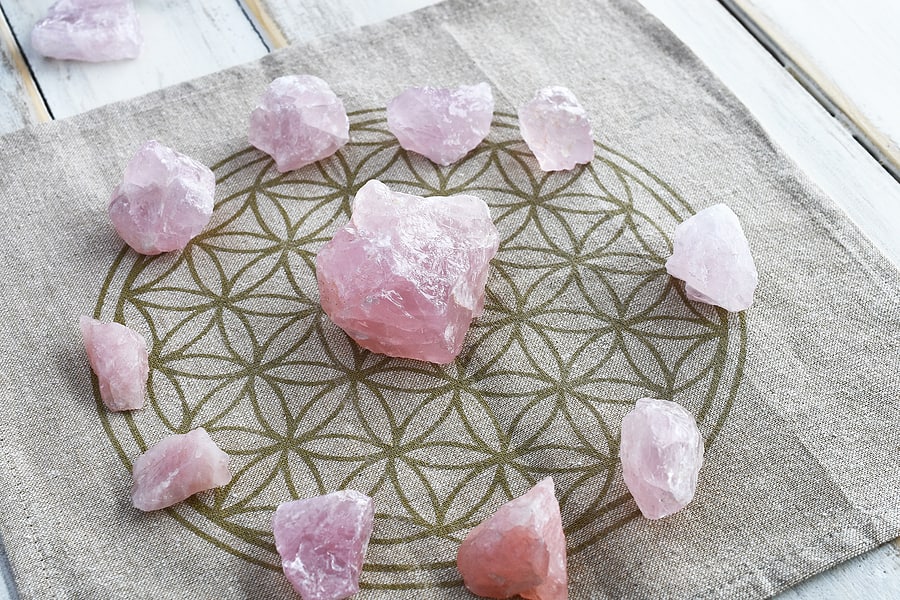
A stone can work like any other reminder on a desk: seeing it may prompt you to begin a planned task. Evidence-based study methods still do the work. The U.S. Institute of Education Sciences recommends spacing learning over time, using active retrieval, and checking what you know before deciding what to review next. A crystal is optional; a timer, sticky note, or ordinary object can serve the same cue.
If you are in high school, use the following routine to make the next study step smaller and clearer. It will not remove stress or guarantee academic results. Start with one subject, one short session, and one question you want to answer by the end.
Three Stones as Study Cues
Stone #1: Amethyst
Use amethyst as a start cue. Put the phone out of reach, write one specific goal, and set a 20-minute timer. For example: “I will answer five algebra questions and mark the ones I cannot solve.” Amethyst does not relieve school anxiety or protect you from stress. If worry lasts for weeks or interferes with school, home, or friendships, the NIMH advises talking with a parent, school counselor, or health professional.
Stone #2: Fluorite
Use fluorite as a retrieval cue. Close the book and write or say everything you remember about one concept. Then reopen the material, check the gaps, and add only what was missing. Fluorite does not strengthen memory, improve concentration, or treat a learning disability. Students who need accommodations should work with a parent or guardian, teacher, counselor, and the school’s established support process.
Stone #3: Carnelian
Use carnelian as a finish cue. Explain one idea aloud in your own words, note one question for the teacher, and schedule the next review. Confidence and creativity grow through practice, feedback, rest, and support; the stone cannot produce them. The CDC notes that teenagers generally need 8 to 10 hours of sleep and that adequate sleep supports attention and readiness to learn.
A 20-Minute Study Routine
Choose one cue object and one task. Spend two minutes writing the goal, 15 minutes recalling or solving without distractions, and three minutes checking errors and planning the next review. Repeat on another day instead of cramming everything into one sitting. A Guardian Angel reflection may offer spiritual comfort if it fits your beliefs, but it cannot guarantee success or replace teaching, tutoring, disability accommodations, sleep, or mental-health care. If a student is in immediate emotional danger in the United States, call or text 988; otherwise start with a trusted adult, school counselor, or health professional.