

Angel cards and tarot cards are related but not identical. Traditional tarot usually follows a 78-card system divided into the Major and Minor Arcana. Most angel cards are oracle cards: the deck creator chooses the number of cards, themes and meanings. Some publishers also make angel-themed tarot decks that still follow tarot’s 78-card structure, so check the box or guidebook before deciding what kind of deck you have.
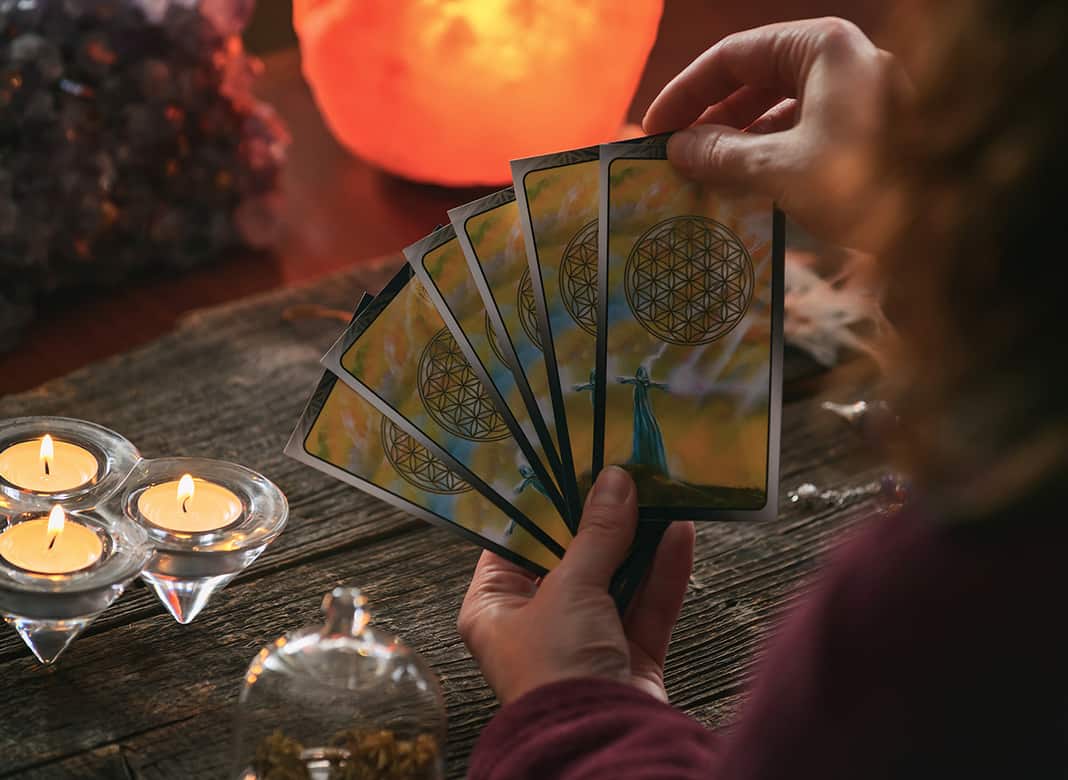
Both can be used as prompts for reflection, storytelling or journaling. Angel decks often use reassuring imagery and direct phrases, while tarot includes a broader range of symbols and challenging themes. Neither format can objectively prove the future, another person’s thoughts or communication with a spiritual being. If you use a deck devotionally, treat the spiritual meaning as a personal belief rather than verified evidence.
Angel Cards and Tarot: The Core Differences
Structure is the clearest distinction. Tarot readers work with recurring card names, suits and archetypes, which makes it easier to compare meanings across decks. Angel-oracle decks use a system written for that specific product, so one guidebook may not apply to another deck. For a beginner overview of angel-card mechanics, see our grounded angel-card guide.
The reading style can differ too. Tarot’s layered structure can suit detailed pattern analysis, while an angel deck’s short messages may suit a quick check-in. The cards themselves do not select a “right” answer, and reader skill does not make a random draw objectively correct. A responsible reader explains the chosen method, invites your interpretation and leaves decisions with you.
How a Reading Works With Either Deck
Start with an open question such as “What should I consider before this conversation?” rather than “Will this relationship definitely work?” Shuffle or select cards according to the guidebook, notice the image and words, then name one interpretation and one alternative. Our session preparation guide gives a fuller question-and-follow-up process.
If you choose tarot, a tarot beginner guide explains the deck’s recurring structure. If you choose angel cards, deck-specific instructions matter more because the system varies. A reader may offer perspective, but the session should not replace financial, legal, medical or safety advice. Avoid repeatedly drawing until you get a preferred answer.
Use the result as a hypothesis to test. For example, a card about boundaries might prompt you to draft one clear sentence before a meeting. It does not prove what a colleague will do or guarantee a successful outcome. Afterward, write down the observation, your interpretation, the practical step and what evidence would cause you to reconsider.
Which Deck Should You Choose?
Choose an angel-oracle deck if you prefer direct prompts, devotional imagery or a shorter guidebook-led practice. Choose tarot if you want a stable 78-card framework and more layered symbolic study. Either choice can support reflection when expectations are realistic. Review the benefits and limits of angel-card readings, then begin with one reversible action rather than a prediction or promise.